
Introduction
When customers encounter your business for the very first time, they form an opinion about it in mere seconds — most of the time, even before having a look at the content. The source of that judgment is the design. Your logo, website, posts on social media, and even your printed materials send a silent message that might be either “trust me” or “don’t trust me” regarding your business.
At this point, graphic design for small businesses is where it becomes a necessity. Not being a designer doesn’t mean that you can’t appreciate its worth, however, the correct application is a must. This guide for beginners will be explaining what graphic design is, its significance, and the ways through which small businesses can take advantage of it to grow professionally without any money loss.
What Is Graphic Design for Small Businesses?
Graphic design for small businesses is the art and the practice of producing the visual content for the purpose of carrying a message. It merges various elements such as colors, typesetting, images, layouts, and icons to deliver information in an attractive and clear way.
To put it simply, graphic design is a tool that helps companies to be seen as professional and to communicate visually.
Graphic design finds its application in:
- Logos
- Websites
- Social media posts
- Flyers and brochures
- Business cards
- Digital ads
- Product packaging
Whenever a potential customer sees a visual representation of your brand, it is graphic design that pulls the strings behind the scenes.
Why Graphic Design for Small Businesses Is Important
A lot of owners of small enterprises regard graphic design as being optional or as being too costly. In truth, poor design leads to greater costs in the long run. In our experience working with small businesses, consistent design is one of the fastest ways to build customer trust.
1️⃣ First Impressions Matter
People determine whether to put their trust in your business or not in a matter of seconds. A clean and professional design can immediately give the company more credibility.
2️⃣ Builds Brand Identity
Using the same colors, fonts, and layouts will make it easy for your customers to identify your brand everywhere — whether online or offline.
3️⃣ Improves Marketing Results
Visually appealing designs are:
- More engaging
- They have higher click-through rates
- They become more effective ads
4️⃣ Establishes Trust and Professionalism
A company that is presenting itself well through visuals has definitely taken the first step to be seen as a large and old company even if it is small or new.
Key Elements of Graphic Design for Small Businesses
Knowing these fundamentals assists you in making more informed design selections.
Color Palette
Colors are the ones that evoke feelings. For instance:
- Blue → trust and reliability
- Red → energy and urgency
- Green → growth and nature
A consistent color palette strengthens graphic design for small businesses across all platforms.
Typography
- Fonts say:
- Serif fonts are traditional
- Sans-serif fonts are modern
- Script fonts are creative
The use of too many fonts would result in confusion.
Images & Graphics
Visually appealing images of high quality will attract the customers’ attention. It is best to stay away from low-res or irrelevant pictures.
- Layout & Spacing
- Proper spacing will help the text to be read easily and the design will look like a high-end one.
- Major Graphic Design Forms Small Businesses Use
- The following are the most necessary ones that you will probably need:
Logo Design
The logo is the face of your brand. It should be simple, easy to remember, and adaptable in size.
Social Media Design
The uniformity of the designs for posts makes people interact more and also remember the brand.
Website Design
The site should have an attractive layout, be mobile-friendly, and easy to navigate.
Marketing Materials
Flyers, banners, posters, and advertisements must be informative about the offers and services.
Graphic Design for Small Businesses: DIY or Professional?
DIY (Do-It-Yourself)
Pros:
- Low cost
- Quick edits
- Good for beginners
Cons:
- Limited creativity
- Inconsistent branding
- Can look unprofessional
Professional Design
Pros:
- Strategic branding
- High-quality visuals
- Long-term value
Cons:
- Higher initial cost
Many businesses start with templates and later invest in professional design for branding.
How Small Businesses Can Use Graphic Design Effectively
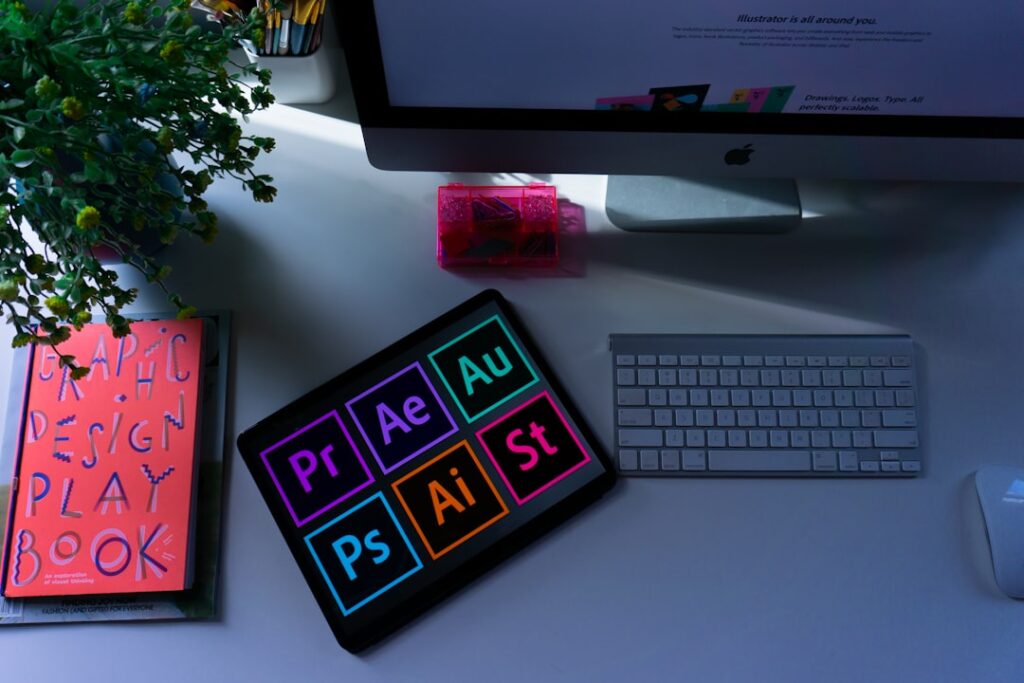
Here are practical tips you can apply immediately:
- Everywhere, use consistent colors and fonts
- Designs that are simple and uncluttered should be kept
- Use templates to save time
- Clarity should be the goal rather than decoration
- Before heavy advertising, invest in branding
Common Graphic Design Mistakes Small Businesses Should Avoid
Mistakes Small Businesses Should Avoid
❌ A lot of colors and fonts
❌ Exactly copying competitors
❌ Not paying attention to mobile-friendly designs
❌ Utilizing images that are of poor quality
❌ Branding that is not consistent
The visual presence becomes better right away by not committing these mistakes.
How Rafeeq Creative Helps Small Businesses
Rafeeq Creative is a company that helps businesses simplify design while still maintaining quality. We can provide you with ready-to-use templates, branding assets, or custom design services, but our aim is to make your brand look professional and confident.
- Learn more about our professional graphic design services for small businesses.
- You can also explore graphic design fundamentals from Adobe.
Conclusion.
Graphic design is not only about appearing good — it is also about clear communication, trust building, and business growth. For small businesses good design is regarded as one of the most intelligent investments you can make.
The use of templates, tools, or professional services does not matter; the key is consistency and clarity. When your visuals are clear, your brand will grow naturally.
FAQ
Q1. Is graphic design necessary for small businesses?
Yes. It assists in building trust, brand awareness, and marketing effectiveness.
Q2. Can graphic design be done by small companies in-house?
Yes, by utilizing templates and tools, but professional design delivers better long-term results.
Q3. What is the most essential design element for a company?
Consistency — using the same colours , fonts and style everywhere.